1921 restrictions on Osage trust fund withdrawals
Killers of the Flower MoonThe 1921 restrictions on Osage trust fund withdrawals imposed a new limit on how much money Osage people under guardianship could access from their own trust funds. Guardians already controlled their finances; the new law also restricted withdrawals to a few thousand dollars a year. Its significance lay not only in the cap, but in the unequal system that determined who would be subject to it and placed decisions about their wealth in other hands.
Mineral wealth and the guardianship system
The restrictions operated within a property system shaped by the 1906 allotment agreement. During negotiations with the United States government, George Bigheart, John Palmer, and other Osage representatives secured individual land allotments of 657 acres and reserved the oil, gas, coal, and other minerals to the tribe. When Oklahoma entered the Union, Osage people could sell their surface land, but Osage headrights—the shares through which members received income from the mineral trust—could not be bought or sold. They could only be inherited. Thus the agreement protected tribal control of mineral wealth while making the administration and distribution of trust income consequential for individual families.
The Indian guardianship system placed that income under outside management for people the federal government classified as unable to manage their own money. The Office of Indian Affairs determined who was considered capable, despite vehement Osage objections. In practice, the classification followed blood quantum: full-blooded Osage people were invariably assigned guardians, while mixed-blood people rarely were. Guardians, usually prominent white residents of Osage County, could oversee and authorize even ordinary purchases. The system therefore did not merely supply financial assistance; it made access to property contingent on an official judgment that disproportionately subjected full-blooded Osage people to supervision.
The 1921 withdrawal limit
In 1921, the United States Congress tightened those controls. People with guardians became restricted as well as supervised: each could withdraw no more than a few thousand dollars annually from a trust fund. The limit applied regardless of whether the money was needed for education or a sick child’s hospital bills. It made the guardian’s authority more than a power to administer spending; it placed a statutory ceiling on what the Osage account holder could obtain for personal and family needs.
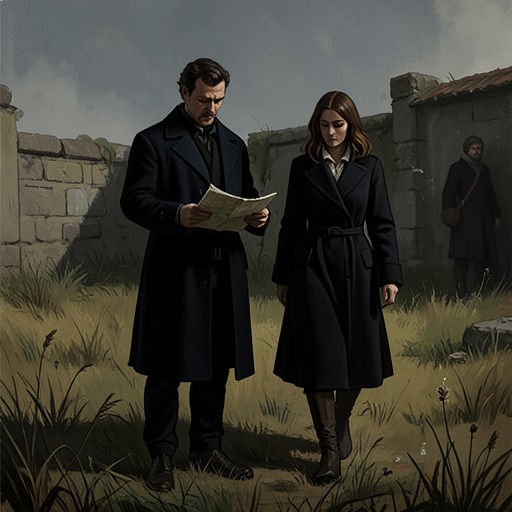
Mollie Burkhart was among those affected. Because she was full-blooded, her trust funds were restricted, although her husband, Ernest Burkhart, was her guardian. Her case shows how the law operated within family life: even with a spouse serving as guardian, she could not freely draw on the income held for her. At a public hearing, the tribe’s last hereditary chief protested that Osage people wanted their money available to raise and educate their children and to live comfortably, and rejected being treated as children unable to care for themselves. The restriction made that complaint concrete: ownership of wealth did not mean unrestricted access to it.
Control, extraction, and conflicts of interest
The withdrawal cap belonged to a broader structure in which guardians and administrators could control both money and the transactions made on behalf of their wards. The book describes guardians who bought goods from their own stores at inflated prices, steered wards’ business to favored banks and merchants in exchange for kickbacks, claimed to buy property for wards while acquiring it themselves, or stole outright. One guardian bought a car for $250 and resold it to a ward for $1,250. A government study estimated that guardians had pilfered at least $8 million directly from restricted Osage accounts before 1925.
The same arrangement could give an appointed administrator access to lucrative estate business. During the investigation into the meeting with the dying Bill Smith, investigators learned that James Shoun had been named administrator of the estate of Smith’s murdered wife, Rita. The appointment allowed him to execute her will and brought high fees as well as opportunities for graft. This episode was not itself an effect of the annual withdrawal ceiling, but it illustrates the conflicts that arose when outsiders administered Osage estates and controlled the processes through which wealth was handled. The restrictions constrained the account holders while the surrounding system gave administrators and guardians substantial power over financial decisions.
Later protections and the limits of reform
The Osage sought legal protection against another form of control over their wealth: inheritance by people outside the tribe. After William Hale and John Ramsey were convicted, the Osage Tribal Council publicly thanked the investigators, and the tribe persuaded Congress to pass a law barring anyone who was not at least half Osage from inheriting headrights from an Osage member. That inheritance rule addressed who could receive headrights; it was distinct from the 1921 restrictions, which limited annual withdrawals by people under guardianship. The distinction matters: protecting the inheritance of mineral rights did not, by itself, give a restricted person free use of trust income.
The later decline in oil income also provides context for what access to that income meant. During the Great Depression, the price of a barrel fell from more than $3 during the boom years to 65 cents in 1931, while an annual headright payment fell below $800. Those figures describe the contraction of oil revenues, not a repeal or a direct consequence of the 1921 law. Together with the withdrawal restrictions and the documented abuses of guardianship, however, they show how formal ownership could coexist with limited access, outside control, and diminishing returns.